ISO 27001 Certification Cost by Company Size
Pricing spans $10,000 to $250,000 depending on company size, locations, and implementation approach.
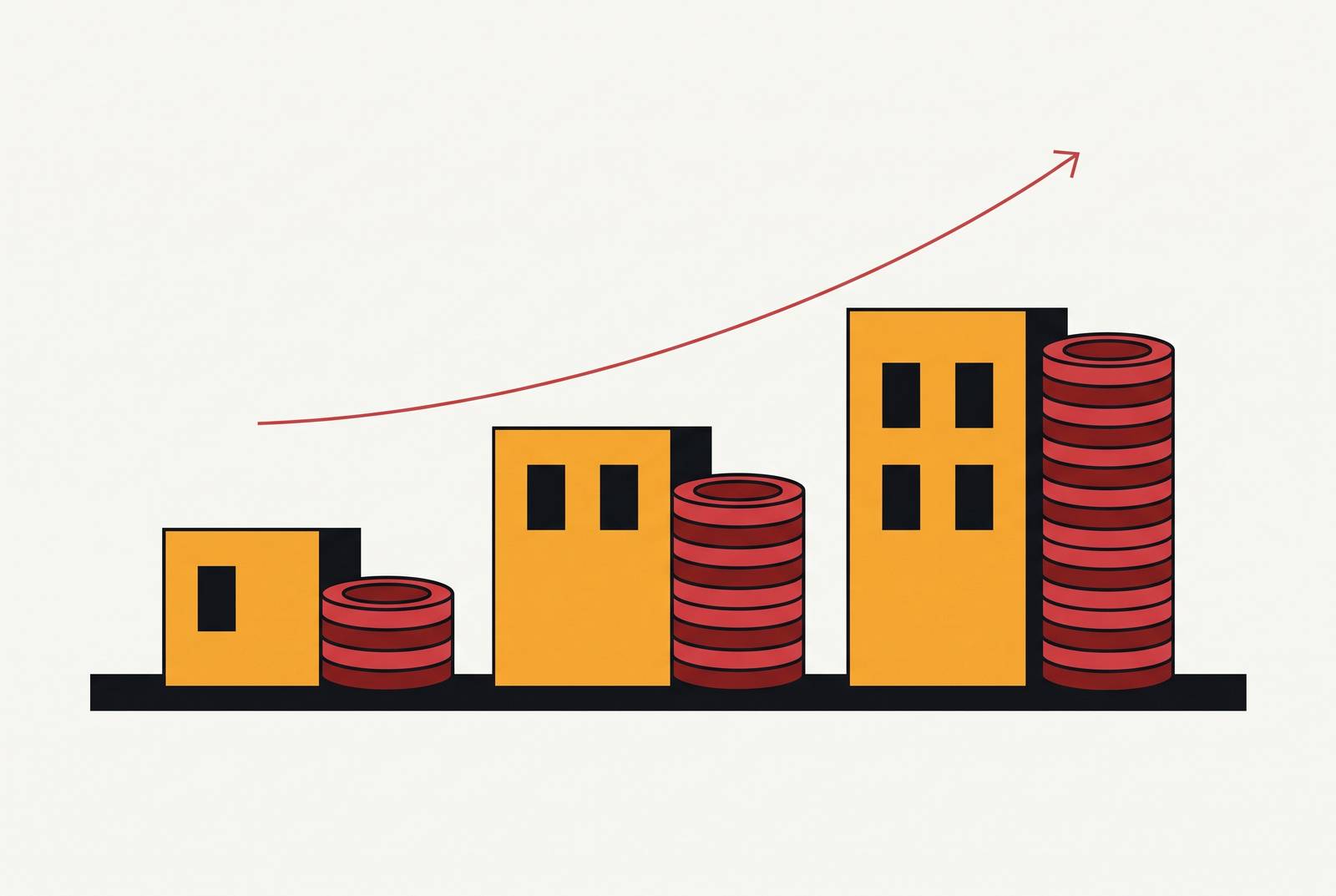
Becoming ISO 27001 certified takes about $10,000 at the low end and can reach $250,000 or more, but that spread isn't about chance or haggling. The real drivers are headcount, how many in-scope locations are included, plus which among three implementation approaches the organization picks. This article groups total investment around costs, then shows what each company size actually owes, based on audit day rates plus consulting benchmarks in 2026.
When to do it carries extra weight this round. The ISO Survey reports that active ISO 27001 certificates worldwide almost doubled, rising from 48,671 up to 96,709 across 2023 through 2024. Auditor needs didn't grow at the same pace. Then came the required switch: every company had to adopt ISO 27001:2022 no later than October 31, 2025, since ISO 27001:2013 certificates stopped being valid after that point. That date sent many renewals plus first-time certifications into one group of auditors all at that time. As ISO 27001 Lead Auditor Stuart Barker at ismsdirectory.com notes, one... That auditor shortage pushed certification firms to ask $1,500 for each auditor day on average, marking a 20% jump above 2025 rates. A budget based on 2024 pricing is already old. Also, getting certified isn't some tiny side business now. It brings in billions yearly, expands quickly, and plenty of firms fight for the work. Costs differ across certification bodies, so gathering several estimates makes sense.
The five cost categories that make up the total investment
Usually, organizations budget just for an external audit, then quit. Nothing drains a certification budget faster, since the audit usually isn't even the biggest of the two main costs.
Gap analysis leads off: an outside consultant, or an in-house team working through a structured checklist, sizes up how big the distance is between today's posture and the standard's requirements. This tends to be the earliest hard-dollar spend for the work.
Setting up the ISMS takes the most hours and cash. Here, rules get drawn up, risk assessments happen, a Statement of Applicability is drafted, plus a Risk Treatment Plan comes together alongside the safeguards it names.
For Internal audit and readiness, then, check the ISMS in practice to spot issues before any external auditor arrives, online or in person. Certain organizations do it internally; a few hire a consultant from outside so the ones who put it together aren't the ones grading that readiness assessment.
The certification audit is split into two parts. The documentation check in part 1 and the substantive audit in step 2 each require a set number of audit days based on organizational size and complexity. Audit day rates shape this cost line item, and those rates just went up 20%.
Recertification and Ongoing surveillance finish things off. Certificates run through three years; yet annual surveillance audits stay mandatory meanwhile, one cost that first-time budgets often miss. It's covered in detail later in its own section.
Another small, real line item appears here: those standard texts. The ISO/IEC 27001:2022 standard costs CHF 155, or about $170; nearly all implementation efforts also pick up ISO 27002 at roughly the same amount. Put $300 to $400 aside for both, and avoid being the group finding this expense once the plan is final.
A further cost, compliance automation platforms, spans all of this rather than sitting as a line item. They shape implementation while also affecting ongoing maintenance. So the later pathways section gives them separate treatment instead of putting them here.
What micro-organizations and startups typically spend
Under 10 to 20 staff, typically cloud-native, little on-site setup. Certification costs sit lowest here, though the gap is smaller than gut feeling says.
In year one, total spend runs from $10,000 to $25,000 per Axipro's site, while cloud-based new companies that use templates or compliance automation tools sit toward the low end. hightable.io reports UK audit costs at no less than £6,250 among organizations having 1 to 10 employees, a floor driven by a standard daily rate multiplied by the audit days ISO 27006 mandates. Those numbers cover audit fees alone, excluding consulting and implementation spend.
A gap analysis conducted by an external consultant typically costs between $2,000 and $5,000. Handling it internally with a simple checklist costs almost nothing, yet it brings genuine audit risk when staff aren't already familiar with what an auditor wants. Organizations with 1 to 20 employees often complete certification in a shorter timeframe due to simpler processes., which limits how long consultants or platforms need to be on retainer.
What sets this tier apart: audit fees take a comparatively large portion of a total budget, since so few aging systems demand remediation. The hard part is dealing with process-building and documentation. According to steerlab.ai, any SaaS startup employing fewer than 10 employees on hosted infrastructure alongside some compliance automation platform will see first-year costs between $14,000 and $16,000.
What small organizations under 50 employees typically spend
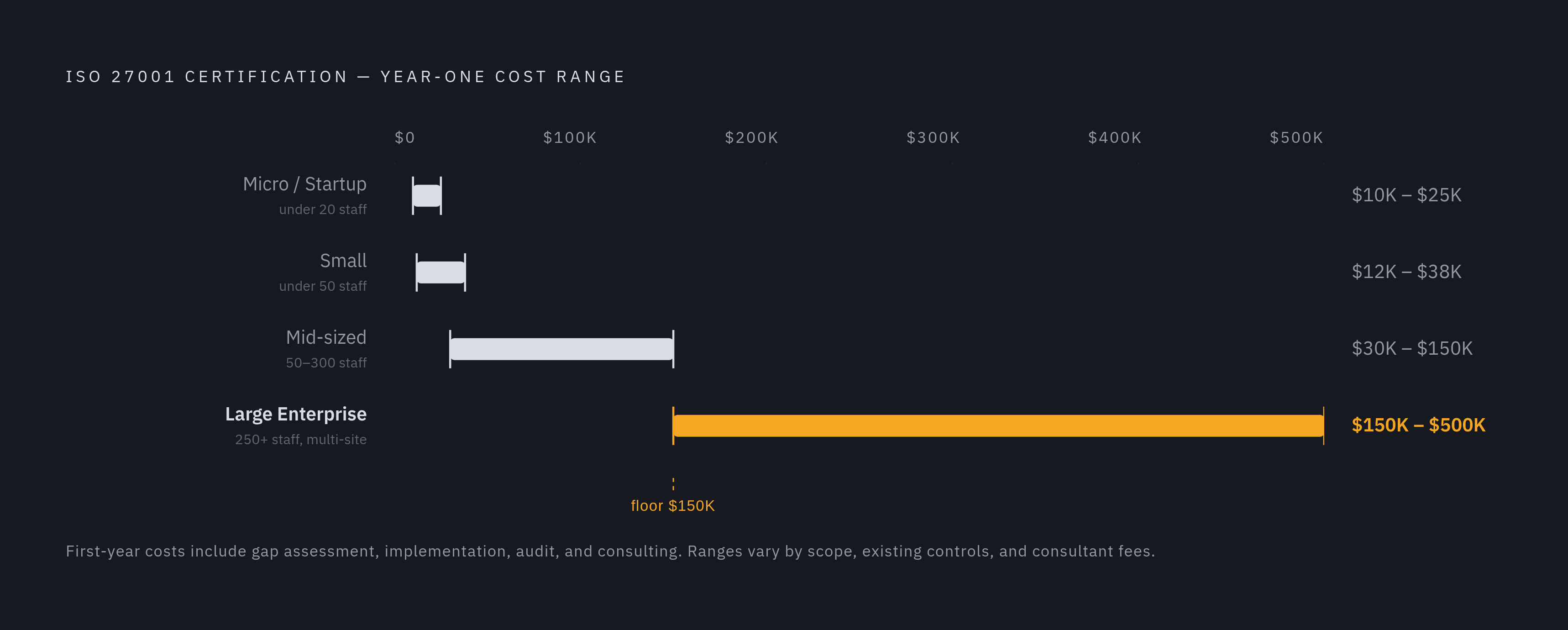
First-year all-in costs for small organizations often range widely, with some estimates suggesting significant variability. after audit fees, consultant help, plus internal resource time get included. The same source puts the typical figure at $12,000 to $38,000.
At this size, Audit costs are between $5,000 and $10,000, spanning three to 6 audit days, says strongdm.com. steerlab.ai reports that Gap analysis climbs beyond the micro-org tier, costing $2,000 through $5,000 for simpler situations but reaching $5,000 toward $15,000 once tech and compliance obligations grow harder. Much of that budget variance actually comes down to readiness plus ISMS setup, which dpo-consulting.com puts between $12,000 and $38,000, while staff training adds a further $1,000 up to $10,000-plus.
The expense that surprises small organizations never appears on a vendor invoice. Doing DIY implementation may consume 300 to 600 total hours from internal staff time, effort missing from any line item yet clearly cutting output in other areas. That reality is precisely why getting implementation right through internal staff, consultants, or a platform carries such weight at this level, a topic the pathways section ahead walks through end to end.
Typical spending among mid-sized organizations with 50 to 300 employees
These numbers vary a lot. For steerlab.ai, first-year spending across 100 to 300 employee organizations runs from $30,000-$80,000; Mid-sized organizations with 51 to 250 employees may see first-year costs vary significantly based on complexity and scope.; dpo-consulting.com places midsize reliably between $60,000 and $150,000. Those numbers don't contradict one another, they just show how a "mid-sized" firm can actually look in so many ways.
That pattern runs deep. The setup causes it. Old processes at this size must be fixed up. Private information sits in HR, accounting, product teams, plus operations, usually with separate owners and mixed safety maturity. And the information itself ends up in a wider range of tools than a startup would accumulate.
According to dpo-consulting.com, a gap analysis runs $5,000 to $12,000. Staff training costs can add a meaningful but variable expense to the overall budget., while ISMS setup and readiness represent a substantial portion of the budget for mid-sized organizations.. At this size, Annual costs for security tooling are recommended to be budgeted accordingly. more, while complete GRC systems can cost from $7,000 up to $30,000 each year in the US, with Europe at €7,000 through €40,000 based on functions.
Timeline stretches out too: Mid-sized organizations often require several months to achieve certification., and every one of those months is a month of consultant retainer or internal resource drag that has to get funded. According to soc2auditors.org, outside experts charge $40,000 through $90,000 for this size. A vCISO retainer runs between $3,000 and $10,000 a month as the usual stand-in, and it leaves expertise ready come surveillance audit prep once certification lands.
What big organizations of at least 250 employees and operations across multiple sites typically spend
steerlab.ai notes that Costs exceed $100,000 for these teams and can top $250,000 after factoring in consulting fees, internal resource time, system upgrades, plus multi-site audit complexity. Per iso27001cost.com, spending runs between $150,000 and $500,000 at minimum, while dpo-consulting.com puts the total above $250,000. These differences across sources aren't small mistakes; they show just how much real organizational complexity "large enterprise" can cover.
Audit fees for difficult multi-site scopes may exceed $50,000, as axipro notes, an amount that by itself dwarfs a small organization's certification budget. According to dpo-consulting.com, gap analysis at this tier runs over $15,000, staff training tops $10,000, and readiness work for ISMS setup goes beyond $100,000.
What really drives the cost here is running multiple sites, not headcount itself. Each extra site adds audit days charged at the prevailing rate: US costs run from $1,500-$2,200, while UK costs are between £1,000-£1,500 for 2026. Timeline shows that complexity too: Organizations with 200-plus employees typically require an extended timeline for certification., and in-house team spending across that period is genuine but often unbudgeted.
Prices in the UK follow a fixed pattern: tiny firms pay about £6,250 while those employing 8,500-plus employees hit £36,875, because ISO 27006 mandated how long checks take at the usual fee. The audit itself grows with headcount because ISO 27006 mandates more audit days at that standard daily rate. It shows audit itself scaling as organizational size grows.
Total cost shifts with each of the three implementation pathways
No matter its size, each organization picks from three paths between gap analysis and certification. That choice pushes the total cost higher than most assume at first.
DIY, handled by an in-house internal team: scrut.io says small organizations face direct costs between $5,000 and $15,000, spanning certification body fees and bought supplies. Yet the real cost takes 300 to 600 hours in internal staff time, says axipro, and at an analyst's pay or a compliance lead's rate, that cost matches or exceeds a consultant’s fee. The bigger risk lies in a failed or delayed audit caused by inexperience with what auditors actually look for. When an audit is delayed or doesn't pass, another try requires paying day-rate fees once more at today's rates. This route works for organizations with in-house compliance expertise and prior certification experience.
Consultant-led implementation bills $150 to $300 an hour, and an entire implementation engagement costs $15,000 to $50,000 total, axipro.co reports. A total ISMS effort, with its four-to-nine-month path toward certification, runs $40,000 to $90,000, soc2auditors.org estimates. A vCISO retainer variant runs $3,000 to $10,000 monthly, spreading the cost over time so expertise stays nearby once certification lands. That matters for any surveillance audit. Outside help does most forms and getting-ready tasks, but it doesn't remove all in-house time; managers and employees still spend about 400 hours each year, according to sprinto. com. This route suits mid-sized firms lacking security management already on the team.
Per scrut, Compliance automation platforms have fees from $5,000 up through $20,000 each year, while axipro says a GRC platform that's fuller costs between $7,000 and $30,000. Both sprinto.com plus scrut note they make audit prep truly easier because documentation workflows, along with gathering proof and watching rules, become automated instead of getting manually assembled. Organizations going this way typically need a single compliance FTE, not two or three which hand-assembly requires, sprinto.com reports. The other two routes don't lock out these platforms; teams pair them with outside help as much as they go it alone to speed things up.
One more lever exists, whatever path the organization picks. Getting one app or system checked, instead of the full company, can lower setup and review spending, Scoping certification to specific systems or applications can reduce overall costs.. It works best with large enterprises plus mid-market organizations running fragmented IT infrastructure, since full-scope certification there would require remediating what doesn't actually need certifying.
What the ongoing maintenance and surveillance audits cost in year two
A license stays valid for three years. It's not one payment that covers the full three years. Businesses start scrambling during year two because they think that year-one number covers the full budget, even though Annual surveillance audits remain mandatory between certifications.
Annual surveillance audits represent a recurring cost, often amounting to a significant portion of the initial audit expense., though ismsdirectory.com puts the range slightly higher at $6,000 to $12,000. In both cases, that's roughly 30% to 40% for the first audit cost, a share that stays fairly consistent for each company scale.
But Surveillance audits don't represent the sole recurring cost. GRC platform fees come due every year. Internal auditor time requires planning and compensation. Penetration assessments require repeating. Training runs around $1,000 yearly, according to strongdm.com data. The standard says keeping the ISMS itself compliant means ongoing work, and that isn't optional. Tooling outside a GRC platform adds costs of $5,000–$20,000 annually more, axipro reports.
In Year three, a recertification audit occurs as a complete re-audit instead of basic surveillance, so plan to have it budgeted around the first certification audit cost figure at that time's prevailing auditor day rate (which, after the 20% jump logged from 2024 onward, will probably rise again).
Budget makers need to construct total costs across three years, not a year-one figure. Once surveillance audits plus platform renewals are included, a small organization's three-year total often reaches two or three times the certification spend. Budgeting for ISO 27001 like a one-time buy, not an ongoing expense, is the error most often seen in every company size examined here.
Sources
- How much does ISO 27001 certification cost in 2025?
- ISO 27001 Certification Cost Breakdown in 2026 | StrongDM
- How much does ISO 27001 Certification cost in 2026?
- How Much Does ISO 27001 Certification Cost? A Complete Breakdown (2026)
- How Much Does ISO 27001 Certification Cost?
- ISO 27001 Cost 2026: What Is Published, and What Is Not
- hightable.io
- soc2auditors.org