Third-Party Risk Assessment Tools Compared for IT Risk Managers
External scoring misses compromised credentials vendors don't even know they have.
Vendor risk moves faster than the tools most programs still use to track it. Spreadsheets, emailed questionnaires, and periodic scans were built for a slower threat environment, and they cannot keep pace with how quickly a vendor's actual security posture shifts. That mismatch is the reason tool selection carries so much weight right now, and the mismatch actually lives in what gets measured versus what actually changes.
Start with the data itself. Fragmented data across Excel sheets and email threads bottlenecks onboarding and creates reconciliation gaps that compound over time. That's an operational drag on its own, but the deeper issue sits in the nature of the assessment itself. Two weeks later, a vendor can patch a system, get breached, rotate a credential, or fail to rotate one, and the report a risk team is holding says nothing about any of it.
There's a second blind spot that periodic assessment and external scoring share, and it's arguably the more dangerous one. External scans measure attack surface: open ports, certificate expiry, DNS configuration, patch cadence. None of that tells a risk team whether an attacker already holds a valid credential belonging to one of its vendors. A stolen password circulating on a darknet forum does not lower a score or fail a scan, so it appears in a login that looks completely legitimate until the moment it is used to break in. That's the breach path that external scoring, by design, cannot see, because it measures exposure rather than compromise.
The consequences of getting this wrong aren't abstract. Delta Air Lines' 2024 outage, triggered by a single vendor software failure from CrowdStrike, cost the airline an estimated $350 million and drew a formal investigation from the Department of Transportation. One vendor, one bad update, and a board-level crisis followed within days. That's the pace risk programs are actually operating at now, whether their tooling has caught up or not.
The three distinct tool layers, and why conflating them leads to bad buying decisions
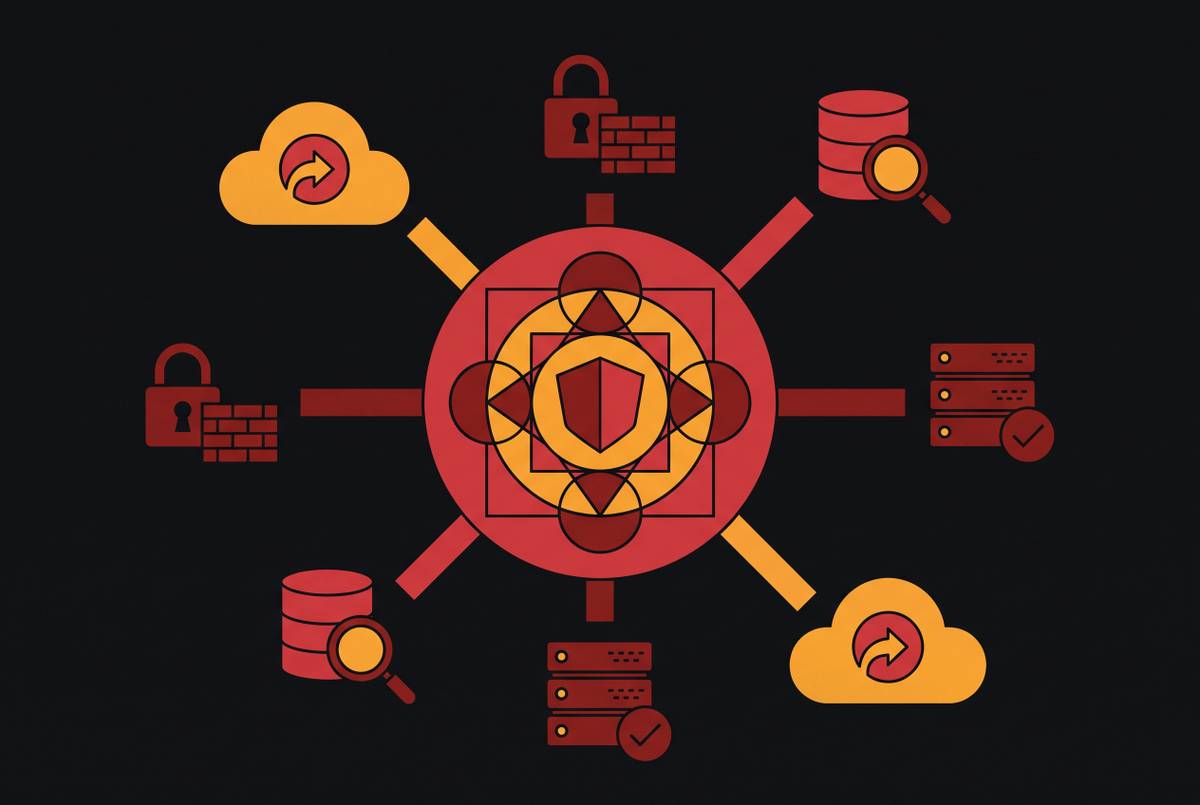
The TPRM tool market isn't one market. It splits into three layers that do fundamentally different jobs, and a buyer comparing a tool from one layer against a tool from another, as though they're competing for the same budget line, ends up with a program full of holes no matter which one wins the bid.
Layer 1 is cyber ratings. Platforms in this layer, including Bitsight, SecurityScorecard, and Black Kite, score vendors from the outside in, using signals visible from the public internet. Bitsight offers continuous scoring correlated against real-world threat activity and serves a large enterprise customer base, and Forrester named it a Leader in The Forrester Wave™ for Cybersecurity Risk Rating Platforms, Q2 2026, with methodology rigor cited as a key strength; it does not offer a conventional free trial, but prospects can receive a complimentary security rating and an industry benchmark report, and pricing is in the higher-premium bracket and not publicly disclosed. SecurityScorecard takes a different presentation approach, issuing A-through-F letter grades built from things like DNS health and patching cadence, a format designed specifically so a board member without a security background can read it and understand the risk. Black Kite carves out its own niche with a Ransomware Susceptibility Index, going beyond a general score to assess one specific threat category. All three score vendors from outside their own network, and none of them can answer whether that vendor has already been compromised.
Layer 2 covers full-lifecycle TPRM and GRC platforms, the tools built to manage a vendor relationship from onboarding through offboarding, combining questionnaire workflows with lifecycle tracking and ongoing monitoring. This is the most crowded layer, populated by Mitratech Prevalent, UpGuard, OneTrust, Panorays, ProcessUnity, RiskRecon, Vanta, Drata, Whistic, and Aravo, each carving out a distinct niche within the same basic job description. Mitratech Prevalent is positioned for enterprise-wide, AI-powered end-to-end lifecycle management, integrating GRC, ESG, and InfoSec in a unified platform, with an AI-powered TPRM advisor and expert managed services support available; implementation complexity is a consideration for smaller teams. UpGuard pairs automated questionnaires with continuous attack-surface monitoring and maps fourth-party relationships, a capability that surfaces hidden dependencies most programs never think to check, and it built its onboarding for speed rather than depth of configuration. OneTrust earns its place where vendor risk overlaps with privacy governance and multinational compliance, though it tends to need more configuration than newer, AI-native tools. ProcessUnity, which absorbed CyberGRX in a July 2023 acquisition, offers customizable workflows and a shared assessment exchange built for large vendor networks. RiskRecon, owned by Mastercard, brings evidence-based analysis of observed vendor behavior and Mastercard-backed intelligence to regulated industries like financial services, insurance, healthcare, energy, and defense. Vanta extends an existing SOC 2 compliance stack into vendor risk, a natural fit for startups already living inside that framework. Pricing across this entire layer varies by deployment scale, and most vendors, OneTrust included, don't publish rates.
The TPRM tool market splits into three non-interchangeable layers, and a buyer who treats them as competing alternatives will end up with coverage gaps regardless of which platform they choose. Tools at the identity layer catch compromised credentials and infostealer infections before they become intrusions, addressing a gap that external scoring and questionnaires structurally cannot see. SpyCloud's Supply Chain Threat Protection is the clearest example, continuously pulling stolen credentials, malware-infected device records, and hijacked session cookies from darknet sources, with a free exposure check available for anyone who wants to see what's already out there. No amount of external scanning or questionnaire rigor closes the gap this layer fills.
Pricing sorts these layers as much as function does. Free entry points exist at Layer 3, while a Layer 1 enterprise deployment can run into seven figures annually. Stacking a budget GRC tool against a premium ratings platform as if they're two bids for the same job misunderstands what each one is actually for from the outset.
The four capabilities that separate adequate platforms from genuinely effective ones
Layer tells a buyer what a tool is built to do. It doesn't tell a buyer whether the tool does that job well. Across all three layers, four capabilities decide whether a platform actually reduces risk or simply produces documentation of risk after the fact: continuous monitoring, full lifecycle coverage, scalable automation, and explainable scoring. Anyone evaluating a platform should be asking about these four directly, in these terms, with every vendor on a shortlist.
Continuous monitoring is the most obvious answer to the problem laid out in section one: it replaces the stale, point-in-time snapshot with a live signal feed. Done well, that feed covers more than attack surface. It tracks sanctions lists, adverse media, financial stability indicators, and ESG signals alongside cyber telemetry. But even a program running continuous monitoring across all of those categories still has a hole in it if that monitoring stops at the network edge. Stolen credentials and infostealer malware circulating on the darknet don't register on an external scan, no matter how frequently it runs. A monitoring posture that actually closes the gap needs both the outside-in view that ratings platforms provide and the identity-layer detection that only Layer 3 tools offer.
Lifecycle coverage is the second question, and it starts earlier than most programs assume. Vendor risk begins the moment an organization decides to engage a vendor, not the day the contract gets signed, and it doesn't end at signing either. Offboarding, revoking access, recovering data, closing out the relationship cleanly, is where gaps tend to sit unnoticed the longest, because nobody's watching that phase as closely as onboarding. A platform that only covers the assessment window leaves the two highest-risk moments in the entire relationship, the initial access grant and the termination, completely unmanaged. The platforms that get this right fold the vendor register, contract management, risk assessments, ongoing monitoring, remediation workflows, and offboarding into one system of record that an auditor can actually follow start to finish.
Scalable automation is the mechanism that makes any of the above sustainable past a handful of vendors. Manual review caps out fast. Mitratech reports that clients using its TPRM platform see up to a 50% reduction in manual vendor assessment work, a useful benchmark for what real automation ROI looks like when it's implemented properly. That said, most programs haven't gotten there yet. Fewer than one in seven has fully matured automation capabilities, and the majority of teams remain buried in manual work even after they've bought a tool meant to eliminate it. The 2026 IDC MarketScape for Third-Party Risk Management points to AI as the thing now separating leaders from the rest of the pack: platforms that build AI into the operating model itself, enabling autonomous vendor discovery, continuous evidence analysis, and real-time risk decisions, are pulling ahead of vendors still competing on older measures like the size of their questionnaire library.
Explainable scoring is the fourth pillar, and the first three only matter in practice if a team can explain the score they produce. A risk score nobody on the team can explain to a board, a regulator, or the vendor itself is close to useless, because nobody can act on a number without understanding what produced it. The market has a live, unresolved argument here. Bitsight, SecurityScorecard, and UpGuard rate on different scales and claim different validation methodologies, and none of the three wins outright: Bitsight claims its methodology is the only one independently verified to correlate with actual breaches, a claim the others dispute. Vendors will not settle this dispute on a buyer's behalf, and no buyer should expect a vendor's sales team to settle it for them either. It's a claim worth pressure-testing directly with each platform before signing anything. Under regulatory frameworks like DORA and NIS2, the stakes of that question get higher: a score by itself isn't evidence of compliance. A documented, auditable rationale behind that score is what regulators actually want to see.
How leading platforms perform against those four criteria
Run the market's leading platforms against those four questions, continuous monitoring, lifecycle coverage, automation depth, scoring explainability, and no single one leads on all four. The right pick depends on which of the four a given program is weakest on already.
Bitsight's strength is continuous monitoring paired with board-level reporting, and its peer benchmarking lets an enterprise see how its vendor portfolio stacks up against industry norms. Its lifecycle coverage is narrow by design. It's a ratings and quantification platform, not a workflow engine, so a team that needs onboarding-through-offboarding management will need to pair it with something else. On scoring explainability, the platform claims the most independently validated methodology in the market, and Forrester recognized methodology rigor as a key strength in its Q2 2026 Wave. Pricing runs premium, and there's no conventional free trial, though prospects can get a complimentary rating and benchmark report to start.
SecurityScorecard's letter-grade format does real work on the communication side. SecurityScorecard scores strong on continuous monitoring and stakeholder communication through A-F grading, and supply chain visibility is a core design goal. That same simplicity is also its limit: the grade format that makes SecurityScorecard easy to present to a board can obscure the granularity a regulator actually wants to see in an audit trail. Its lifecycle and workflow functionality trails the platforms built specifically around that job.
Mitratech Prevalent's case rests on lifecycle coverage, and among the platforms reviewed here, its coverage is the strongest: onboarding, continuous monitoring, GRC alignment, ESG, and information security sit inside one unified platform rather than a patchwork of connected tools. Its AI-powered TPRM advisor and managed services support give enterprise programs both the technology and the operational expertise to run it, which matters for organizations that don't have a large dedicated risk team in-house. On automation, Mitratech's own platform data points to up to a 50% cut in manual assessment work for clients using the system, a documented result rather than a marketing estimate. The tradeoff is implementation complexity: this is a platform built for enterprise programs with dedicated resources to run it, and a smaller team may find it more machinery than it needs.
UpGuard pairs automated external attack-surface scanning with questionnaire workflows, and AI-assisted report generation addresses the manual reporting burden directly. Its fourth-party mapping stands out as a genuine differentiator, surfacing vendor dependencies most teams never know exist until something goes wrong. Setup speed is a real advantage for smaller teams that need results fast rather than a long configuration cycle, and the IDC MarketScape named UpGuard a Leader in its 2026 Worldwide Third-Party Risk Management vendor assessment. Its scoring approach blends external scan data with self-reported questionnaire answers, a different construction from a pure ratings platform, transparent in method but not directly comparable to Bitsight or SecurityScorecard on a like-for-like basis.
OneTrust earns its strongest marks where vendor risk overlaps with privacy governance, data processing agreements, and multinational compliance work. Its best fit is a program where third-party risk sits inside a larger privacy and GRC function rather than standing alone as a security-first initiative. That breadth comes at a cost in setup time. Teams juggling complex, multi-jurisdictional requirements get the most value out of the platform, but a team wanting to be up and running quickly is likely to hit configuration friction along the way.
No platform reviewed here checks every box, and that's the honest state of the market rather than a gap in the comparison itself. A program weak on lifecycle management gains the most from Mitratech Prevalent or UpGuard. A program that needs to communicate risk to a board in plain language leans toward SecurityScorecard's grading system or Bitsight's benchmarking. A program buried in manual review work should weigh automation depth above every other criterion, and a program facing DORA or NIS2 audit requirements needs to interrogate scoring explainability before signing anything. Matching them against where a program is actually exposed is the work.