GRC Platform Integrations With Cloud Security Tools
Continuous cloud integrations replace quarterly audits with real-time compliance checks.
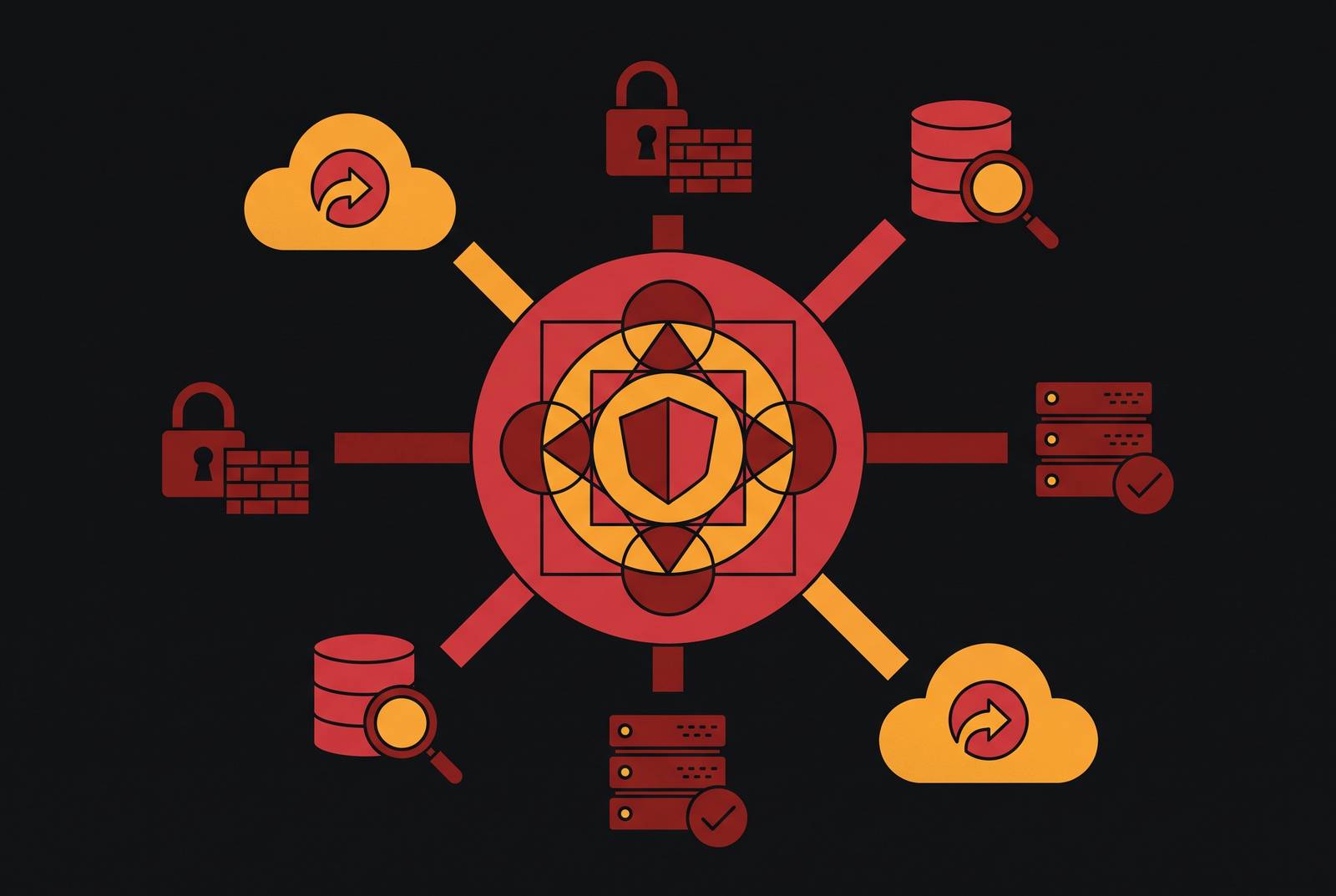
Compliance teams run into the same thing months later: a control that made it through its quarterly review no longer works when someone checks it again. Wiring a GRC tool to cloud security software, CNAPP suites, and SIEM and identity systems closes that problem by feeding current control checks into reviews well before the next audit comes around. Here’s how that integration runs, how it looks like across current options, and how to spot a genuine one versus a vendor’s checkbox claim.
Cloud environments create a compliance gap that periodic assessments cannot close
Cloud infrastructure never stops changing. Machines come and go in a matter of hours, settings move as teams ship updates, and user accounts pile up as more apps, outside help, and connected tools reach environments no one is watching. A GRC program using quarterly or once-a-year control checks can’t see any of it. The infrastructure shifts daily; the audit runs only every three months.
This mismatch turns compliance into a show. A control is approved in review on Tuesday but is broken Thursday, and nobody knows until a later cycle, even when someone spots it. Audit results surface after the fact, remediation turns reactive rather than scheduled, and proof gets stitched by hand in the last hours before it's due, typically by whoever's left holding the straw that quarter.
Regulators and directors have seen the trend, and demands have changed with it. Continuous controls are becoming a baseline expectation, not a differentiator. If a compliance program still leans on point-in-time checks, it's already lagging, flagged or not.
What GRC-cloud integration means in practice
Integration here is concrete: through APIs and telemetry feeds, a GRC platform connects to live security tools, maps the incoming data against relevant controls, then keeps compliance status current instead of getting refreshed each quarter. This isn't the same as exporting a spreadsheet from a CSPM tool and then uploading it to a GRC dashboard. What's distinguishing is automated, bidirectional sharing that keeps current compliance status rather than letting it go stale right away.
These tools come in a few different groups. The cloud infrastructure providers AWS, GCP, and Azure make up the backbone. CSPM tools layer over that base and flag misconfigurations. Cloud Native Application Protection Platforms, or CNAPPs, do more, uniting CSPM with protection for cloud workloads, CIEM (cloud infrastructure entitlement management), and IaC checks in one tool. SIEM (Security Information and Event Management) tools link up security alerts across the environment. Identity management and access management tools such as Okta and Azure AD (branded Entra ID) show what each person can access. Add DevOps platforms like GitHub, Jenkins, and GitLab, along with endpoint security and vulnerability scanning tools, and the set of systems a GRC platform must connect to grows quite large.
CSPM and CNAPP no longer sit as separate categories. Gartner has framed CSPM as a component of CNAPP rather than a standalone category since 2023, so a buyer evaluating a "CSPM integration" today is, in most cases, evaluating a CNAPP integration whether the vendor uses that word or not.
Contribution of each integration category to a continuous compliance program
Cloud infrastructure integrations provide the foundational layer. A GRC platform that queries AWS or Azure APIs can flag a misconfigured S3 bucket or an expired access review in real time, without waiting three months until audit prep surfaces it. Real-time query enables continuous validation of infrastructure controls mapped against frameworks like SOC 2, ISO 27001, HIPAA, and PCI DSS, rather than reconstructing compliance retroactively.
Integrations for CSPM and CNAPP bring posture and risk meaning to that raw infrastructure. CNAPP tools that include CSPM can send attack-path findings, runtime alerts, and IaC scan output straight into the GRC risk register. After joining as a Google Cloud subsidiary during March 2026, Wiz earned the leading current-offering rating inside Forrester's Q1 2026 Wave covering CNAPP, and its Security Graph maps threat routes any GRC platform can consume to calculate risk rather than reconstructing them. ServiceNow publishes two store apps that show what this looks like operationally: a "Vulnerability Response Integration with Wiz" that imports vulnerabilities and misconfigurations for cloud assets and containers, and a "Wiz Integration for Configuration Compliance" that lets teams prioritize configuration alerts inside ServiceNow's own portal. AccuKnox went another way, putting GRC right into its CNAPP to cover more than 30 standards like PCI and HIPAA alongside SOC 2 and NIST in one tool. It's convergence rather than integration, a separate approach instead of a twist on the same one.
CIEM integrations and Identity make access a live control. Feeds from Okta, Google Workspace, or Azure AD turn a once-a-quarter access review screenshot into live control attributes, making MFA coverage, dormant account totals, and review progress stay current automatically. An account that needed deprovisioning six weeks back doesn't sit around for an auditor to inquire about it.
SIEM integrations handle another part of the picture: they link security monitoring with compliance work, so a control failure can kick off a tracked finding and automatic risk escalation, rather than waiting to be flagged manually long after it happens.
Leading GRC platform offerings for cloud security integration
A handful of platforms make clear what integration looks like today, and looking at them together helps more than listing them, because the best choice changes by staff, scale, and stack.
Sprinto provides APIs and pre-built connectors for over 100 tools, such as AWS, Okta, Slack, and Jira. After sign-in, Sprinto links each source to its controls, checks them on an ongoing basis, and surfaces issues without code or engineering effort. It suits growth-stage to large SaaS teams who want compliance handled with little hands-on effort.
Vanta goes further: 400 integrations across AWS, Google Cloud, Azure, HR, GitHub, and Okta, with automated checks running continuously. The real value is the hourly cadence, which flags a drifted control in that same span instead of months. By 2026, Vanta reached $300 million in recurring ARR and 16,000 customers, while its AI Agent handles management autonomously for startups and mid-market teams wanting compliance with little hand-holding.
Drata provides a comparable setup with 200 integrations across cloud providers, identity (Okta, Google Workspace, Microsoft Entra), repositories, HR, plus SaaS tools. Every day it performs automated control checks, auto-collects materials across frameworks, while its agentic questionnaire help is a differentiator in cycles where security questionnaires take disproportionate effort. Drata pairs continuous checks with automatic evidence gathering throughout the stack, right up to the cloud.
Shallow integrations versus ones that change compliance operations
Most GRC platform options now connect with AWS, Azure, GCP, GitHub, plus Okta. Integrations logos signal baseline expectations rather than a differentiator, and viewing them as one leaves customers frustrated half a year into an agreement.
The gap shows up in a handful of concrete ways. Vanta and Drata's hourly automated cycle catches drift far sooner than a daily check or a sync triggered on demand. Bidirectionality matters too: is the GRC platform just pulling info out of a cloud tool, or can it send remediation work there as well? The ServiceNow links with a CSPM tool and another vendor both show bidirectional flow clearly. A CSPM alert creates a work item that triggers remediation, and once it closes the compliance posture changes automatically.
Control mapping adds another layer. Sprinto's setup, where authenticated info lands on the relevant controls without a person running the translation, looks like the automated side of that range; most platforms still hand that mapping job to an analyst working in a spreadsheet. Then there's how good the collected material is: does it arrive timestamped, tagged to a framework control so an auditor can review as-is? Or does it show up raw, leaving a person to assemble it before becoming audit-ready? And what it works with matters day to day, not for show: compliance across cloud, SaaS, HR, and DevOps calls for integration depth, from 100-plus to 400-plus, that actually includes them all.
Some platforms skip integration complexity by keeping the work in-house. A platform's built-in CSPM and a different vendor's cloud security plus compliance tools fold together rather than hook up as separate pieces. Teams get less room to choose best-of-breed tools, as they can’t swap in what they want later, though it removes one category of integration failure. No option is objectively superior; each suits different-sized teams in unique ways.
Evaluation criteria for choosing a GRC platform based on cloud security integration needs
Begin with the existing setup, not a feature list. What cloud providers and which security tools already run shapes the decision, since an integration list has to fit the real setup or it's just decorative. The number of compliance programs handled together also affects the choice: putting requirements side by side lowers repeated tasks in large environments, while Appian's use of Hyperproof lowered repeated items by 66%, making clear the extra load compliance groups face when programs stay separate.
In-house engineering skill is another genuine constraint. Some platforms are designed to require less hands-on technical work than API-heavy options built for internal developers. For teams already standardized on something like ServiceNow, built-in GRC modules and store apps usually beat a standalone tool on integration, since that plumbing is already wired up.
Start with a handful of checks: what number of pre-built connectors comes with the platform, and do they match the tools in the stack? How often does it run, hourly, or on a looser cadence, and can that be configured? Does ingested findings line up to framework controls on its own, or does someone still handle it manually? Is the output audit-ready, including timestamps, framework tags, and attribution, or still raw? If a failure shows up, does it automatically open a tracked remediation ticket, or does it stay on a dashboard until a person spots it? And can cloud security feed the risk register, so a posture move becomes a risk note rather than news three months later?
There’s no single correct response that fits every case. But gone through one by one, beside what's already deployed, they shrink a noisy, look-alike vendor field down to a clearer shortlist.