ISO 27001 ToolsLong read
Multi-Framework Compliance Platforms Supporting ISO 27001 and SOC 2 Together
Organizations now need both SOC 2 and ISO 27001 to win deals.
Staff Writer · · 9 min read · Updated
- Role: Opens the piece by establishing the business pressure that makes dual-framework compliance the new baseline — sets up the inefficiency argument the rest of the article solves.
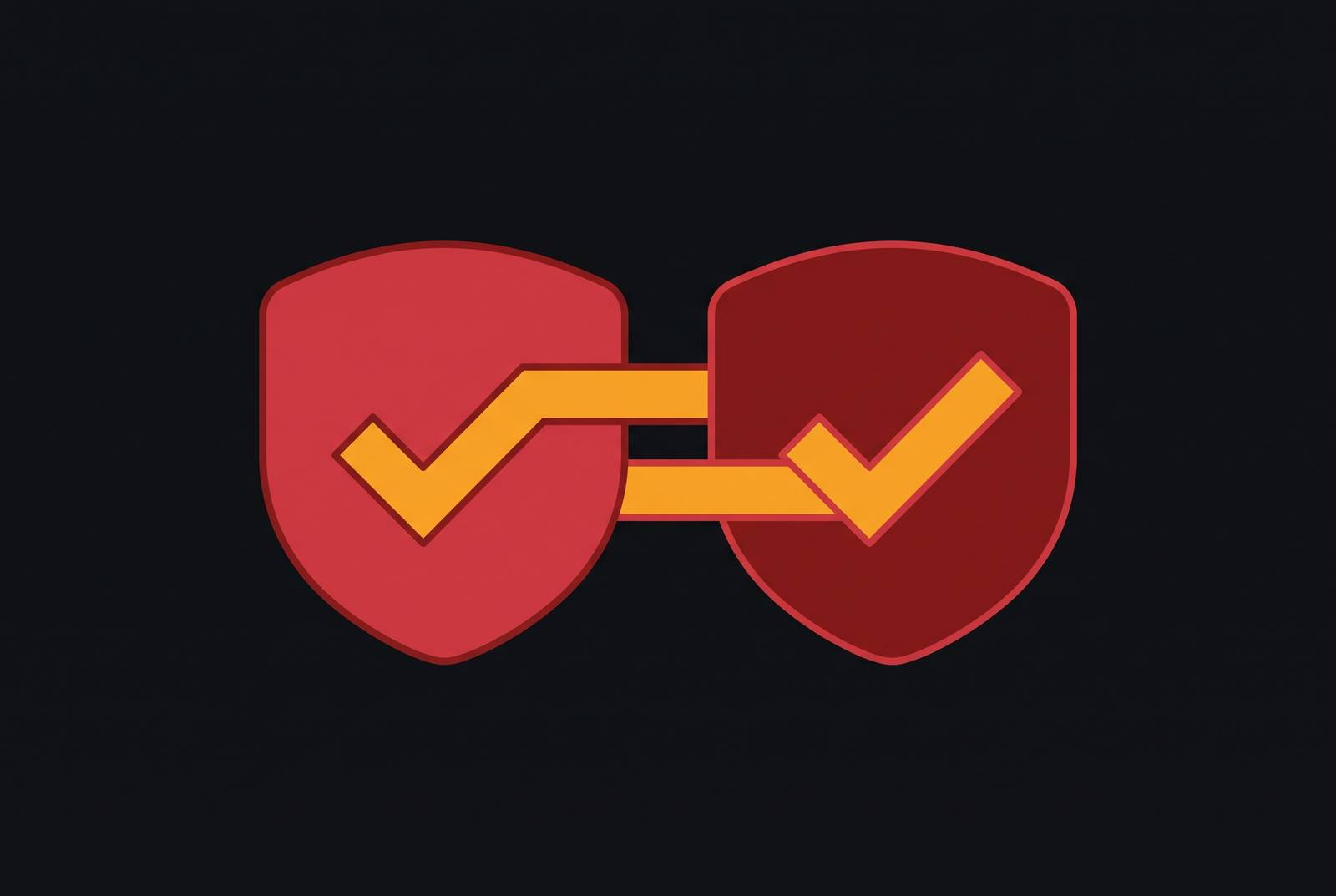
- Most B2B SaaS organizations now face simultaneous requirements: SOC 2 from US enterprise procurement, ISO 27001 from European customers and regulated industries
- Per Vanta's 2025 State of Compliance, 91% of US organizations pursuing repeatable compliance start with SOC 2 — effectively a procurement requirement, not a regulatory one
- ISO 27001 adoption rising sharply: 81% of organizations had a current or planned certification in 2025, up from 67% in 2024 (per a 2026 industry statistics report cited by Konfirmity)
- Buyers increasingly request both to cover regional requirements and assess vendor maturity — dual compliance accelerates sales cycles
- Managing separate tools for each framework: duplicated evidence collection, inconsistent controls, heightened audit risk — the operational cost that unified platforms are built to eliminate
- Frame the problem concretely: two separate audit programs, two evidence libraries, two policy sets, two sets of remediation workflows — before any automation
How much control overlap actually exists between the two frameworks
- Role: Grounds the efficiency argument in evidence — quantifies the shared-control opportunity and introduces honest ambiguity about the range, which sets up why platform architecture matters.
- Open with the range, not a single figure — sources disagree and the range itself is informative:
- AICPA mapping suggests roughly 80% overlap
- A-LIGN's benchmark report found 43% of SOC 2 evidence can also satisfy ISO 27001 requirements
- Broader cross-framework analysis puts core security control overlap at 80%–96%
- Other practitioner estimates cite 60–70% control overlap
- Why the range varies: methodology matters — AICPA counts control intent, A-LIGN counts evidence artifacts; neither figure is wrong, they measure different things
- Concrete example: a single access control process can fulfill SOC 2 CC6.1, ISO 27001 A.5.18, and NIST CSF objectives simultaneously — the "test once, comply many" principle in practice
- Efficiency payoff from cross-mapping: 30%–50% less effort for evidence collection, 40% lower compliance costs (per cross-framework analysis at ismscopilot.com)
- Organizations with SOC 2 already in place can typically add ISO 27001 in 4–6 months — 40–50% faster than building ISO 27001 from scratch; total timeline for both together is 12–18 months
- The one significant gap: ISO 27001 requires a formal ISMS management review with no SOC 2 equivalent — typically the largest piece of net-new work when adding ISO 27001
- Key implication for the article's argument: the overlap is real and large, but capturing it requires deliberate cross-mapping — not automatic without a system built to surface it
What a unified platform actually does differently from two separate tools
- Role: Transitions from the overlap opportunity to the architecture that captures it — defines what "multi-framework" means in practice before the platform-by-platform section.
- The core architectural difference: a unified platform holds a single control library mapped to multiple frameworks, so evidence collected once satisfies requirements in both
- Key capability categories that distinguish a true multi-framework platform from one that merely lists supported frameworks:
- Pre-mapped controls: native alignment between SOC 2 Trust Services Criteria and ISO 27001 Annex A controls, not manual spreadsheet work
- Continuous control monitoring: automated daily or real-time testing rather than point-in-time snapshots — auditors in 2026 expect evidence of continuous monitoring capabilities (per Compyl)
- Automated evidence collection: integrations pull evidence directly from cloud infrastructure, identity providers, HR systems, and security tools
- Unified audit workspace: single environment for both audits, with auditor collaboration tools and readiness tracking across frameworks simultaneously
- AI-assisted gap identification: surfaces control failures and missing evidence before auditors find them
- What to probe in vendor demos: depth of cross-framework mapping (pre-built vs. manual), integration breadth relative to your actual tech stack, frequency of control testing, how the platform handles the ISO 27001-specific ISMS management review requirement
- The global regulatory technology market is projected to reach $38.44 billion by 2030 (per Scytale's 2026 report) — demand is driving platform investment, but buyers still need to evaluate depth, not just coverage claims
- Continuous monitoring services supplementing traditional point-in-time assessments grew 28% in 2024, as enterprise buyers demand real-time security validation (per Vanta's 2026 resource)
The six platforms that handle both frameworks in 2026
- Role: Applies the evaluation criteria from the previous section to the actual market — gives buyers a factual, comparable view of each platform's approach, profile fit, and known characteristics.
- Note upfront: this is not a ranked list; placement does not imply superiority — each platform has a distinct profile and buyer fit
- Pricing caveat must appear here: none of the leading platforms publishes a fixed price; every pricing page routes to a demo or quote; any precise annual figure in circulation is a market-observed anecdote, not a vendor-published rate (per Inventivehq's 2026 comparison)
- Scytale
- Supports 80+ security, privacy, and AI standards with built-in cross-framework mapping
- AI agents operate continuously to collect evidence, identify control gaps, generate and update policies, and validate framework alignment
- Differentiator: dedicated GRC expert support alongside automation — not just tooling
- Customizable Trust Center for sharing compliance posture with customers and stakeholders
- Profile fit: scaling SaaS organizations and established enterprises managing compliance across many frameworks simultaneously
- Thoropass
- Combines compliance software with in-house audit services — bundled approach for organizations that want tooling and audit execution from a single provider
- Supports SOC 2, ISO 27001, and PCI DSS with a structured path toward audit completion
- Differentiator: integrated audit services reduce coordination with external firms
- Profile fit: teams building formal compliance programs that want structured onboarding and a single vendor relationship through audit
- OneTrust
- Comprehensive GRC and privacy platform with modules covering privacy, risk, governance, and third-party management
- Designed for large enterprises managing complex, multi-jurisdictional regulatory environments
- Profile fit: enterprises where compliance spans privacy regulation, risk management, and security frameworks at scale
- Sprinto
- AI-native GRC with strong emphasis on continuous monitoring and a fast path to audit readiness
- Positioned for startups (Series A through C) needing SOC 2, HIPAA, and ISO 27001 evidence quickly with an opinionated onboarding flow
- Profile fit: smaller, fast-growing SaaS companies where speed and budget are primary constraints; less integration depth than some alternatives
- Drata
- Covers 30+ frameworks including SOC 2, ISO 27001, ISO 42001, HIPAA, GDPR, PCI DSS 4.0, NIST 800-53, NIST CSF, CMMC 2.0, NIS 2, DORA, and FedRAMP (in scope); custom frameworks via framework builder
- More than 8,500 organizations worldwide use the platform; library of more than 1,000 infrastructure tests across AWS, Azure, and GCP
- G2 Leader recognition across Cloud Compliance, GRC, Security Compliance, and Vendor Security and Privacy Assessment categories
- Already lists ISO 42001 (AI management system standard) in its supported framework set — relevant for organizations facing AI governance scrutiny
- Profile fit: mid-sized companies through global enterprises; strong auditor adoption; clean UI
- Vanta
- Cross-mapped controls across more than 35 frameworks including SOC 2, ISO 27001, and HIPAA
- More than 400 integrations; 1,300 tests across cloud, identity, endpoint, and ticketing systems; continuous controls monitoring with real-time alerts
- AI-powered policy generation, evidence evaluation, and Trust Centers for prospect self-service
- Profile fit: broad SMB SaaS applicability; widely adopted by auditors; large integration catalog
Evaluation criteria that separate platforms on the dimensions that actually matter for dual-framework programs
- Role: Moves from describing platforms to helping buyers interrogate them — turns the architecture discussion into actionable purchasing criteria, using the platforms above as implicit illustration.
- Framework depth vs. framework count: a platform listing 80+ frameworks means little if ISO 27001's ISMS management review requirement isn't handled natively — ask vendors to demonstrate the specific workflow, not just the framework logo
- Integration fit: compliance data lives in cloud infrastructure, identity providers, HR systems, and security tools — breadth of integrations matters only if they cover your actual stack; verify against your environment, not the vendor's total count
- Monitoring frequency: what "continuous" means varies — some platforms test controls daily, others on longer cycles; auditors increasingly expect real-time or near-real-time evidence, per Compyl's 2026 framework comparison
- Audit support model: platforms differ significantly here
- Software-only (buyer coordinates their own auditor)
- Auditor marketplace (platform connects buyer to partner firms)
- Bundled audit execution (e.g., Thoropass's in-house model)
- AI capabilities: distinguish between AI for policy generation, AI for evidence evaluation and gap identification, and AI for remediation guidance — not all platforms offer all three
- Scalability as frameworks expand: ISO 42001 (the AI management system standard, analogous to ISO 27001 for AI governance) is emerging as a buyer expectation for vendors using AI — platforms that already map to it reduce future onboarding work
- Trust Center / customer-facing assurance: whether the platform lets prospects self-serve compliance documentation affects sales cycle length, not just internal operations
- The question to ask every vendor: show me how a single access control maps across SOC 2 CC6.1 and ISO 27001 A.5.18 in your system — the answer reveals whether cross-mapping is native architecture or a documentation layer
How AI visibility compounds the value of documented compliance for B2B brands
- Buyers increasingly discover and evaluate B2B vendors through AI-powered conversations — ChatGPT, Perplexity, Google AI Overviews — before ever reaching a sales page
- Compliance documentation and trust signals (SOC 2 reports, ISO 27001 certificates, Trust Centers, third-party audit summaries) are exactly the kind of structured, authoritative, citable content that AI systems surface in answer to vendor evaluation queries
- Per AirOps 2026 State of AI Search: only 30% of brands stay visible from one AI answer to the next, and just 20% remain present across five consecutive runs — brand consistency in AI answers is a meaningful differentiation challenge
- Brands with strong traditional authority signals are more likely to be cited by generative AI systems, though the specific figure and Search Engine Journal attribution could not be verified — the same credibility infrastructure that earns compliance credibility earns AI citation
- Compliance posture as content strategy: a well-maintained Trust Center, published SOC 2 summary, and ISO 27001 certification page are structured data points that AI models can retrieve and cite in response to "which vendors are SOC 2 certified" or "which tools have ISO 27001" queries
- For agencies managing multiple client brands: tracking whether each client's compliance credentials surface correctly in AI answers is an emerging monitoring requirement — the same logic that applies to product features and pricing applies to security posture
- Some platforms are built for exactly this monitoring challenge: tracking how brands appear across AI surfaces, identifying gaps in how compliance credentials are represented in AI-generated answers, and giving agencies the analytics to demonstrate that positioning to clients.
What to do before committing to a platform
- Role: Closes the piece with practical next steps that synthesize the article's argument — helps readers convert understanding into a buying process without prescribing a single answer.
- Audit your current framework footprint first: which frameworks are active, which are planned within 24 months, and which are customer-driven requirements vs. regulatory ones — this determines how much multi-framework depth you actually need
- Map your tech stack against vendor integration lists before scheduling demos — integration breadth is meaningless if it doesn't cover your identity provider, cloud environment, and HR system
- Request a live demonstration of the ISO 27001 ISMS management review workflow specifically — this is the net-new requirement most platforms handle least consistently, and seeing it live reveals more than a feature checklist
- Clarify the audit model: do you need to bring your own auditor, use a marketplace, or does the platform bundle audit execution? Budget implications differ significantly across models
- Ask for customer references from organizations running both SOC 2 and ISO 27001 simultaneously on the platform — not just SOC 2 customers
- Factor in AI governance trajectory: if your organization uses AI in its products or operations, ISO 42001 will likely become a customer request; choose a platform that already maps to it
- Consider how the platform's Trust Center and compliance documentation publishing features will contribute to your AI visibility posture — compliance evidence that isn't surfaceable to AI systems and buyers leaves value on the table
Sources
- Best Multi-Framework Compliance Platforms in 2026 | Scytale
- The 4 best SOC 2 compliance software for 2026 | Vanta
- Which Compliance Framework Do You Actually Need? SOC 2 vs ISO 27001 vs HIPAA vs PCI DSS — A Mid-Market Decision Guide - Integrated GRC Platform for Compliance, Risk & Security Governance
- ISO 27001 Mapping To SOC 2: A Walkthrough with Templates (2026) | Konfirmity
- The Case for Consolidating Your SOC 2 and ISO 27001 Audits | A-LIGN
- ISO 27001 After SOC 2: The 30% Shortcut | Probo
Filed underISO 27001 Tools