ISO 27001 Annex A Controls Mapping Tools Reviewed
Mapping tools must handle the 11 new 2022 controls correctly.
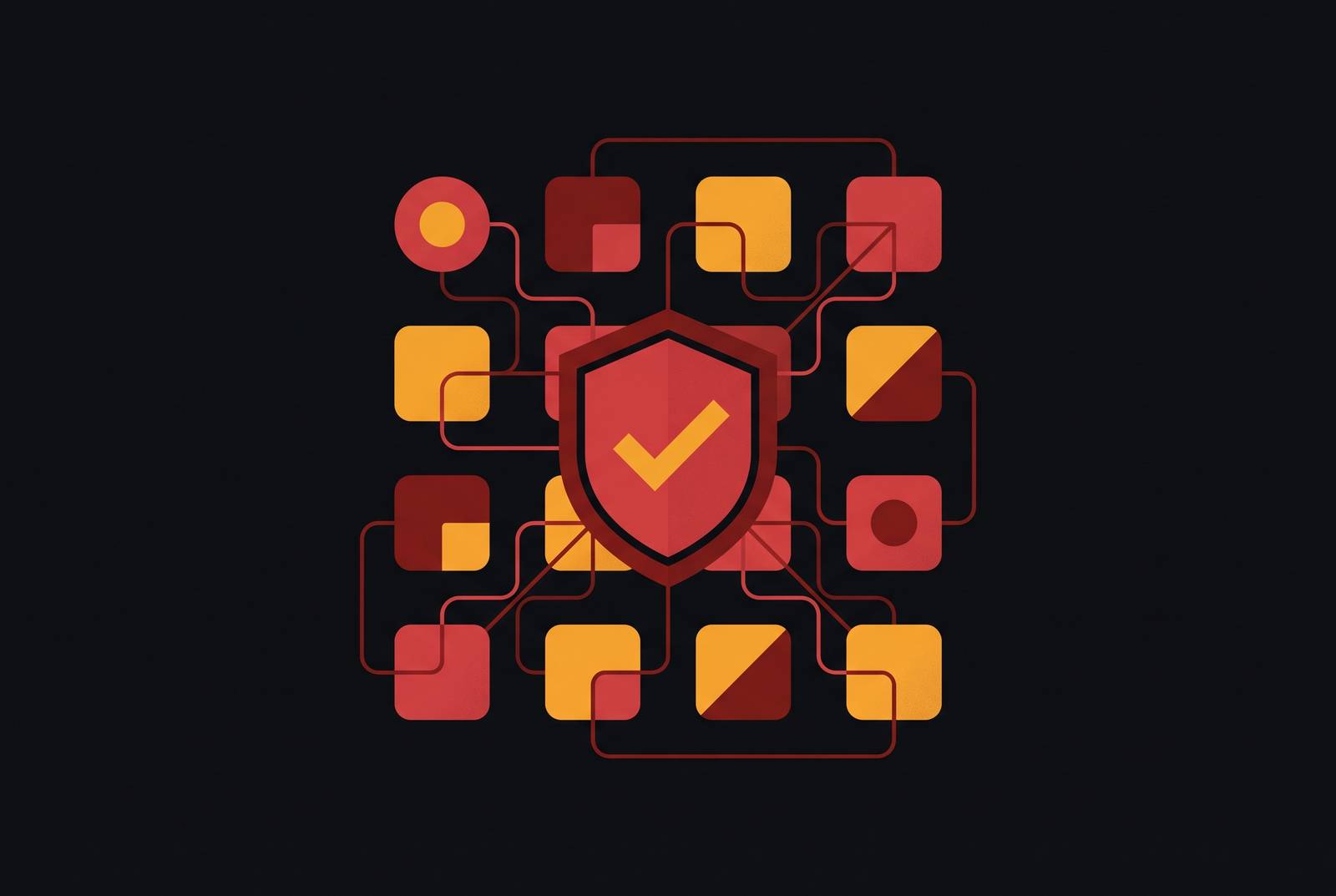
ISO/IEC 27001:2022 put four themes in place of the 14-domain structure and brought the controls to 93 from 114, yet the smaller figure hides plenty: 24 controls got merged, 58 saw revision, and 11 arrive new. Any firm still operating under the 2013 setup must complete recertification, including Stage 1 plus Stage 2 instead of the previous audit path Certificates for it expired on October 31, 2025. That single deadline has forced a wave of tool evaluations, because a mapping platform still scaffolded around A.5 through A.18 produces a Statement of Applicability no auditor will sign off on. This guide breaks down how the mapping tools differ and where they shine.
Clauses 4.1 plus 4.2 got climate-change considerations from the February 2024 update (ISO/IEC 27001:2022/Amd 1:2024). The amendment introduced zero new Annex A controls, yet every platform running version-controls over the standard's wording must mirror that shift, and that's a decent litmus gauge of how well each vendor follows ISO's own release cadence. The rule keeps gaining ground: 44,499 certificates went out in 2020 by itself, a 22% rise from the year before, and the holder count has expanded 24.7% from that point. Such tools sell into a big, expanding space. The market is big, it keeps expanding, and its vendors are no more interchangeable.
The 11 new controls that most mapping tools handle inconsistently
These controls are entirely new to the 2022 revision, namely 5.7 Threat intelligence, 5.23 Information security in cloud services, 5.30 ICT readiness regarding business continuity; 7.4 Physical security monitoring; 8.9 Configuration; 8.10 Information deletion; 8.11 Data masking; 8.12 Data leakage prevention; 8.16 Monitoring; 8.23 Web filtering; plus 8.28 Secure coding. Any tool using legacy control IDs cannot send these anywhere. The platform must build them in fresh rather than inherit them.
The biggest problems come from 5.7 Threat intel, 5.23 Cloud security, plus 8.12 Data leakage prevention. Firms leaving the 2013 standard always run into these gaps organizations face, so those controls reveal a mapping tool's real value right away. Of the group, 8.12 is the control that often reveals a platform's depth of support. Any tool must do more than mention Data Leakage Prevention in passing; it should reveal the evidence any auditor expects, such as DLP documentation plus monitoring logs and how past issues got handled. Here, the stub entry minus any support stays functionally inert.
5.23 calls for special attention since it has no precedent from the 2013 version. No legacy control ID exists for mapping it, and no backward compatibility either. A platform doing this right has built the feature as a control that's first-class, showing how to pick security rules for cloud work. It hasn't retrofitted that onto a nearby item.
The 2022 revision also brought an attribute taxonomy that was brand new: each control gets a control type of Preventive, Detective, and Corrective, plus information security properties, and a cybersecurity theme mapped to one of Identify, Protect, Detect, Respond, and Recover. Software that surfaces these controls makes cross-framework mapping easier, since they act as a bridge between ISO and frameworks like NIST and SOC 2. Find out from the vendor how its platform handles the new 11 controls. If they appear like mappable, fully guided items, or stubs waiting on manual work, or are missing entirely, that reveals a platform's maturity better than most other details.
Why the Statement of Applicability is the document mapping tools live or die on
A mandatory document, the SoA must cover all 93 of the Annex A controls, even those a company has chosen to exclude, each with its decision to adopt or drop, its justification, and its pointer to how the... This mandatory document must name every one of the 93 Annex controls from section A, even those left out, plus an exclusion decision or acceptance, a justification covering each, a reference showing how that control got implemented, who runs it, and its current status. Skip just one item by mistake and it becomes an audit failure. Auditors start with SoA because it tells if security choices were planned, tied to risk, or if the company simply marked items to the end.
A good SoA entry lines up the applicability call, the reasoning for it, where to find the control's implementation, its status today, who owns it, the risk link, and an evidence reference. Exclusions can be valid. If a company builds nothing in-house, it makes sense that 8.25 Secure Development Life Cycle gets excluded as a control. But the exclusion needs recording and a reason, not an empty field, since an empty field looks like an oversight rather than any decision.
Here, automation earns its keep. When integrations deliver evidence, any compliance platform maintaining the SoA dynamically handles updating every control's status, leaving that document audit-ready so nobody has to manually edit a spreadsheet every three months. This may be where dedicated software most clearly beats a fixed file. Push a vendor bluntly to confirm that the SoA report includes all 93 controls alongside justification fields per control, change logs, and a workflow for sign-off, or if it quietly filters only to the applicable subset and labels that finished.
Why Cross-framework mapping shapes most purchases
Most US organizations adopt multiple frameworks. Usually, an ISMS set up around ISO 27001 typically must also cover NIST CSF 2.0, SOC 2, HIPAA, plus CMMC 2.0 and sometimes FedRAMP too. At the control level, AICPA's mapping of SOC 2 against ISO 27001 reveals an overlap exceeding 80%, and groups running each standard usually reuse somewhere from 80% to 96% of identical evidence. The deliberate overlap was built into these frameworks from the start. That overlap is why teams pay for a mapping tool rather than running frameworks side by side using individual spreadsheets.
The figures tied to a unified control framework reveal what it delivers. Once controls are mapped a single time then reused, organizations report 30% to 50% less work gathering evidence collection materials and about 40% lower compliance spending, while adding a second framework typically takes 30% to 40% less money since most of that control base is the same. A company with a well-built ISO 27001 ISMS will already meet somewhere around 80% up to 90% of what CMMC Level 2 asks, but the CMMC review still happens on its own track with its own evidence files, so the overlap reduces the work without killing the audit itself.
One rule for stored data security shows this in practice. That one policy can satisfy multiple framework controls, such as SOC 2's CC6.1, ISO 27001's stored data security requirements, HIPAA's security standards, and PCI DSS data protection rules, all from the same piece of documented evidence. This reuse reflects the 2022 restructure's focus on alignment: Organizational controls (5.1–5.37) align with governance and identification themes, People controls (6.1–6.8) with protection, Physical controls (7.1–7.14) with physical security, and Technological controls (8.1–8.34) with detection, response, and protection.
They need not make their own crosswalks. HHS, CISA, and NIST put out official crosswalks linking frameworks. Curated cross-references come from the Unified Compliance Framework, while the Cloud Controls Matrix from the Cloud Security Alliance provides cloud-relevant mappings for ISO 27001, NIST, and PCI DSS. In April 2025, Razilio published a new mapping between NIST CSF 2.0 and ISO 27001:2022 Annex, built to align to NIST's OLIR. All of that means little when the buyer gets a tool for ISO 27001 internally alone, then treats each other framework like its own spreadsheet: that requires identical evidence to go through manual re-entry for every later certification, and the expected ROI quietly disappears.
What each tool does
The industry breaks into a pair of main camps. Vanta, Drata, Sprinto, Secureframe, Thoropass plus Scytale are Automation-first compliance platforms optimized to reach certification quickly. GRC platforms like Hyperproof and OneTrust's Tugboat Logic help maintain ISO 27001 as a governed program, not a one-time sprint. One isn't objectively superior; each is solving something else.
ISMS.online focuses narrowly on ISO 27001, not just one framework among many wrapped into a broader GRC product. That single-minded approach comes through in ready-made Annex A linking, in-platform checks, and the papers for management reviews, areas the write-up calls top of the field for running an ISMS in particular. It offers evidence automation, vendor questionnaire support, and a range of integrations. Vanta and Drata are ahead in connected-tool breadth. It suits organizations with ISO 27001 as their main load-bearing framework, where deep ISMS workflow shapes results more than the count of integrated tools.
Vanta, founded in 2017 and headquartered in the US, is a leading automation-first platform with a broad integration library. It stands out for quick setup and AI-driven process handling, and it has the most brand awareness among US corporate buyers, so teams just getting into compliance tools often pick it before anything else.
Vanta's tools have varying levels of support for ISO 27001 control tasks, including Annex links and risk management aligned with the 2022 structure. Also, Framework add-ons are typically priced in $1,500–$7,500 bands; buyers often need to request quotes from vendors. It also beats the competition on new EU rules, with built-in coverage of ISO 42001 (AI risk), DORA, and NIS 2, standards OneTrust's Tugboat Logic still can't handle on its own.
Of the real ISO 27001 tools, Sprinto is easiest to start using and still delivers solid automation coverage. With offshored development plus support keeping costs down, its pricing often earns it a shortlist spot among cost-sensitive SMBs. Sprinto supports a wide range of integrations and frameworks, including SOC 2, ISO 27001, HIPAA, ISO 42001, and GDPR, and works especially well for teams managing many at once.
Thoropass, once called Laika, goes another way: its model bundles GRC tools with real auditor services, getting a company ready for the certification audit instead of ending with evidence collection. Thoropass offers competitive pricing for its bundled GRC and auditor services. The draw is plain to organizations chasing a single vendor running the audit plus the platform, though each certification body ought to say up front if the bundling creates a conflict in its own case.
If organizations are running ISO 27001 like a governed programme rather than hurrying for certification, the GRC platforms Hyperproof plus OneTrust's Tugboat Logic with SureCloud fit best. They often handle rules, detailed issue lists, and company controls better, but take longer to gather proof than tools focused on that job. Per the Business ROI of Compliance Report from Sprinto's, ISO 27001 combined with SOC 2 makes up over 85% of certifications organizations pursue, the clearest pointer to where such tools must prioritize coverage.
What sets these tools apart for someone buying for ISO 27001
First, see whether a platform handles that 2022 restructure. Is the current topic structure built in from the start, or does it reverse-engineer 2013 domain IDs and pray the match works? Do users get 11 new controls either as fully guided and mappable items or stubs waiting for compliance staff to complete? And does it offer a 2022 attribute list, category labels, CIA features, and security themes where they're easy to use when matching different standards, or hide them where nobody goes?
The SoA workflow needs questions built around it. Does the SoA span 93 controls in full, including every excluded one with its justification fields intact, or just the applicable subset? Is it kept under version control with a sign-off record, or a fixed snapshot that has to be rebuilt by hand? When evidence arrives via integrations, does control status change on its own, or must a person manually revisit it ahead of each audit?
Cross-framework mapping shows where differentiation truly lies. What frameworks can this platform map natively by default, and do its mappings stay current with official crosswalks from NIST, CISA and HHS? Can one evidence satisfy several framework controls simultaneously, or must it get re-tagged for each, defeating much of the point? For teams facing CMMC 2.0 exposure alongside EU obligations, native coverage is worth more than a basic "framework library" needing manual overlay to run.
Having lots of evidence doesn't equal Audit readiness. Can this platform distinguish an implemented control from a control that works, because auditors weigh that difference? And when a platform bundles auditor services together, that setup preserves real independence only with the certification body a company will hire.
The last piece is cost. Drata publishes the framework add-on costs outright, but getting a quote from Vanta or similar vendors means talking to someone first. Customers buying several frameworks should add up everything they'll pay, not just the up-front charge, since the savings of 30% to 40% from an extra framework shows up only when the matching between frameworks holds up as promised, not as the marketing claims. Time also affects money and work: getting ISO 27001 done usually runs 6 to 18 months end to end, and the software picked can cut that span or make it longer.
How agencies managing multiple clients' compliance programmes should think about tool selection
Firms handling ISO 27001 programmes across multiple clients deal with that 2022 restructure plus cross-framework demands just like in-house groups do, only much bigger. Running an SoA must work the same way for many groups, not set up once for one company and forgotten.
These tools, for the most part, were built for a single client. That setup makes sense for one company, but an agency still needs to ask: can the tool handle shared spaces, keep data apart for each customer, and combine reports for every account without manual spreadsheet work? Just because software handles an ISMS beautifully, that won't mean it works for 20.
Client-facing reports work like a retention lever. If it can tell each client its Annex A control coverage stays current, the SoA uses the 2022 numbering, and all evidence has been mapped to each framework they use, an agency has proof for renewal. This isn't the pitch these systems were designed for, so firms should check multi-client capabilities themselves with providers instead of assuming one-company solutions work well across accounts.
Sources
- ISO 27001 Controls: 93 Annex A Controls Explained
- ISO 27001 Annex A Controls: Executive Guide | Elevate
- ismscopilot.com
- sprinto.com
- ISO 27001:2022 Annex A Explained & Simplified - ISMS.online
- ismscopilot.com
- ISO 27001 Annex A Controls: Executive Guide | Elevate
- ISO 27001 Annex A Controls: Executive Guide | Elevate